Reflections on investing in the world around us, in an era ripe for pragmatism
- investment
- thematic-insights
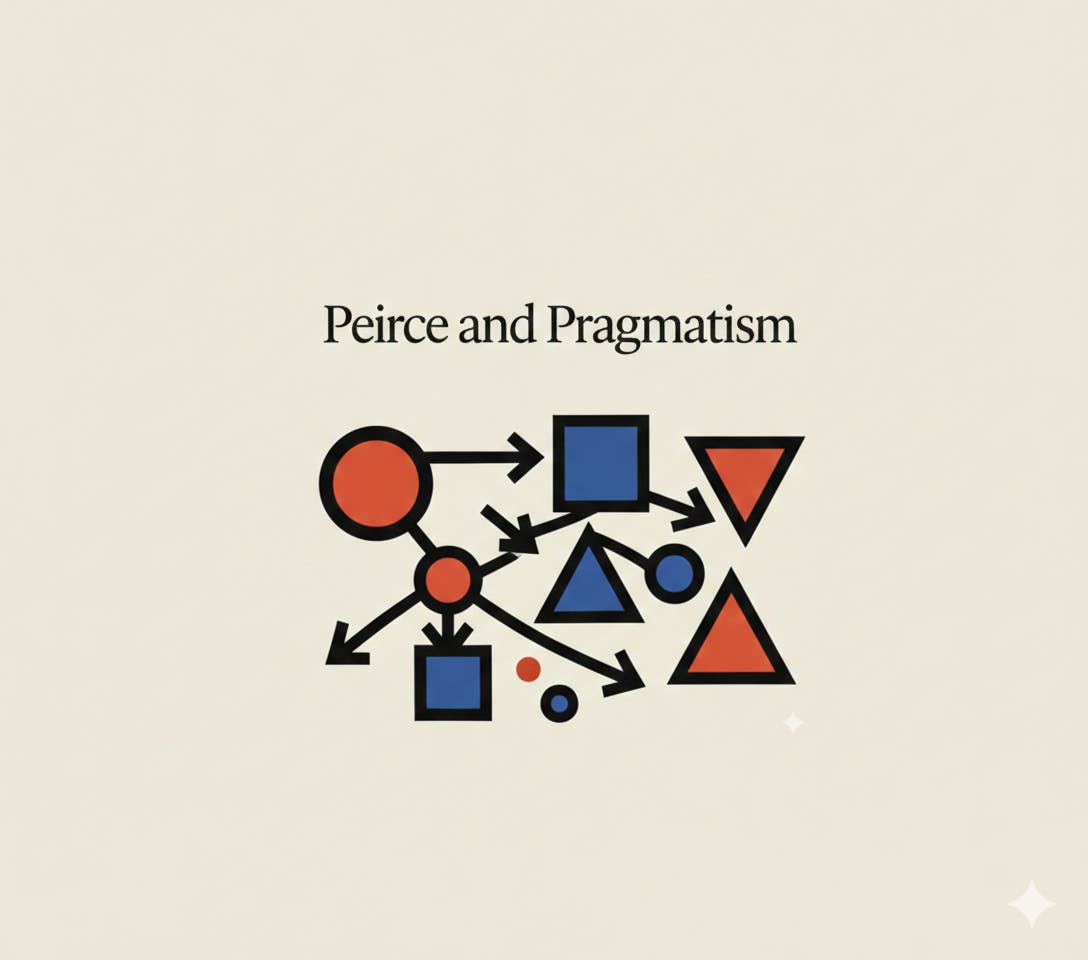
The other day, I noticed that our use of the word ‘pragmatism’ had increased. Particularly in relation to our somewhat metamorphic portfolio. Others might think that we simultaneously hold too many mutually exclusive things for there to be any overarching truth in the middle. While this could be seen as a lack of focus – too much frippery! - it is, in fact, a rigorous application of anti-foundationalism[1]. To misquote Karl Popper, ‘whenever a theory appears as the only possible one, take this as a sign that you have neither understood the theory nor the problem it was intended to solve’. Perhaps the investment world could do with more Deng Xiaoping; a move past black cats and white cats in favour of open-minded grey cats. Perhaps, it is time for a bit more Charles Peirce[2].
The flux and volatility in the investment landscape seems to stretch between two poles: fundamentals/model-dependency and reactionary pivot trading/momentum. What to do from here? Is the former approach dead? Is the latter approach ‘ruining everything’? To navigate the moving parts of a changing world, perhaps there is merit in employing scientific pragmatism, whereby being open minded is a formal logical discipline rather than a rudderless personality trait.
It seems unlikely that some absolutely incognizable truth exists in the market – a thing-in-itself, an intrinsic value that is fixed and hidden. Instead, knowledge is a continuous network of reasoning. In a world of shifting geopolitics and accelerating tech cycles, why appeal to stubbornness or authority? Is it worth recognising that signs only obtain meaning through their relationship to other signs, in an evolving triadic[3] sequence? This underpins the importance of a shift from static valuation to relational logic. The latter of which appears closer to how information actually propagates.
No knowledge is independent of previous conditions. Perhaps our industry tends to rely too heavily on induction, reverse engineering and backtesting the past. Is today’s world better suited to abductive reasoning? Abduction... is the only logical operation that introduces new ideas into the system.
No knowledge is independent of previous conditions. Perhaps our industry tends to rely too heavily on induction, reverse engineering and backtesting the past. Is this new world better suited to abductive reasoning? Abduction – a term coined by Peirce to denote a type of non-deductive inference that is different from the inductive type - is the only logical operation that introduces new ideas into the system. We seem to observe ever more ‘surprising facts’ in data but instead of ignoring these as outliers, we can move towards hypotheses that explain them. Or form a new understanding of novel or emerging context.
Consider the petrochemical market – traditional models of mean reversion assumed a cyclical return to a 15-20% EBITDA margin for western polyethylene producers, based on historical marginal cost pricing. But, between 2020-25, China added 40mn tonnes of ethylene capacity. A ‘surprising fact’ that moved the market from a species-genus[4] relationship of localised cycles to a globalised and flattened state. The entry of massive, integrated refining to chemical complexes effectively lowered the marginal cost of production to the 90th percentile producer and narrowed the spread between the high and low-cost producers by nearly 30%. Global utilisation rates, which historically bottomed at 85%, have now been re-baselined to 78-80%, rendering previous intrinsic value calculations based on tight supply obsolete.
Using the triadic model, we can treat such market movements as flexible signs. The meaning of a concept is not what it was in the past but the total of all general modes of conduct that would follow its acceptance. This pliability creates an infinitely growing space of meanings. Hopefully, an infinitely growing space of ideas. Under this schema, you don’t just invest in what is happening today, but the modality of the future – exploring not just how reality will unfold but how it could unfold. This provides ultimate optionality: the ability to interpret chimeric signs as they grow and mutate. To build a portfolio as a living reflection of the world’s complexity, which is not necessarily something to be reduced.
Peirce promotes communal inquiry over individual bias. Investment can be plagued by individual ego and psychological satisfaction. Our approach is instead built on a community of inquiry. We reject the idea that the success of an inquiry is tied to an individual mind(set). The focus is instead on self-control as an inhibitory process that distinguishes rational reasoning from mere impulse. By removing the individual from the centre of the thesis, we ideally remain objective enough to pivot when the data demands it. No need to save face.
We are not merely flexible. We are pragmatists in the Peircean sense. Using scientific logic to clarify conceptual meanings, and artistic breadth to allow them to float, as we move through repeated testing and improvement. This is how we reconcile the moving parts: by viewing every investment as a commitment to a logical process rather than a bet on a fixed point.
By Vittoria Schrager
[1] The recognition that there is no 'absolutely incognizable' truth or fixed intrinsic value in the market
[2] The father of pragmatism in the true sense – a preeminent American polymath and logician who pioneered pragmatism as a rigorous scientific method for clarifying the meaning of concepts through their practical, observable effects. A master of semiotics.
[3] A triadic sequence is the fundamental structure of a sign, representing a three-way relationship that rejects simple linear (dyadic) cause-and-effect models.
[4] Probability and meaning reveal the relationship between a species of event (a cyclical downturn) and its genus (the historical cost-curve regime)

The content of this website does not constitute financial advice nor a financial promotion. It is provided for general information purposes only as an illustration of Inthallo's work and investments. The information contained on this website shall in no way be construed to constitute a recommendation nor an offer with respect to the purchase or sale of any investment. Investing involves risks, including loss of capital, illiquidity, lack of dividends, loss of investment and dilution. We recommend investors seek advice from a regulated financial adviser.
The information on this section of the website is directed at United Kingdom residents only. The website, including the content of the pages, is subject to English law.